


Cal Gives Up the Car
Mobility Options Are Workable

dae photo
It was time to do without a car.
Cal, a retired mechanical engineer, knew that instinctively, but he needed Doc Matthews to confirm that – and his son, Ben, to finally say something about not driving.
"Yeah, Dad, after your last eye checkup, I doubt you could pass the eye exam at the DMV," he now remembers Ben saying.
He tried to find a bright spot in a situation he always knew could come but dreaded it all the same – especially after Ellen, his wife, died and he moved into Green Meadows, a new assisted living facility in Southeast Minneapolis, near the University of Minnesota campus.
"I never wanted to be an old man driving an old car that was in poor shape and dangerous to drive," Cal told Ben with a smile. "I remember Ken thought he had the best car on the road before he died, but it was a 20-year-old Olds and not in good shape."

Ben chuckled. "You're right, Dad," he agreed. "And used cars are in short supply right now. You should get good money for your Honda. You bought that in 2017, right? How many miles have you got on it?"
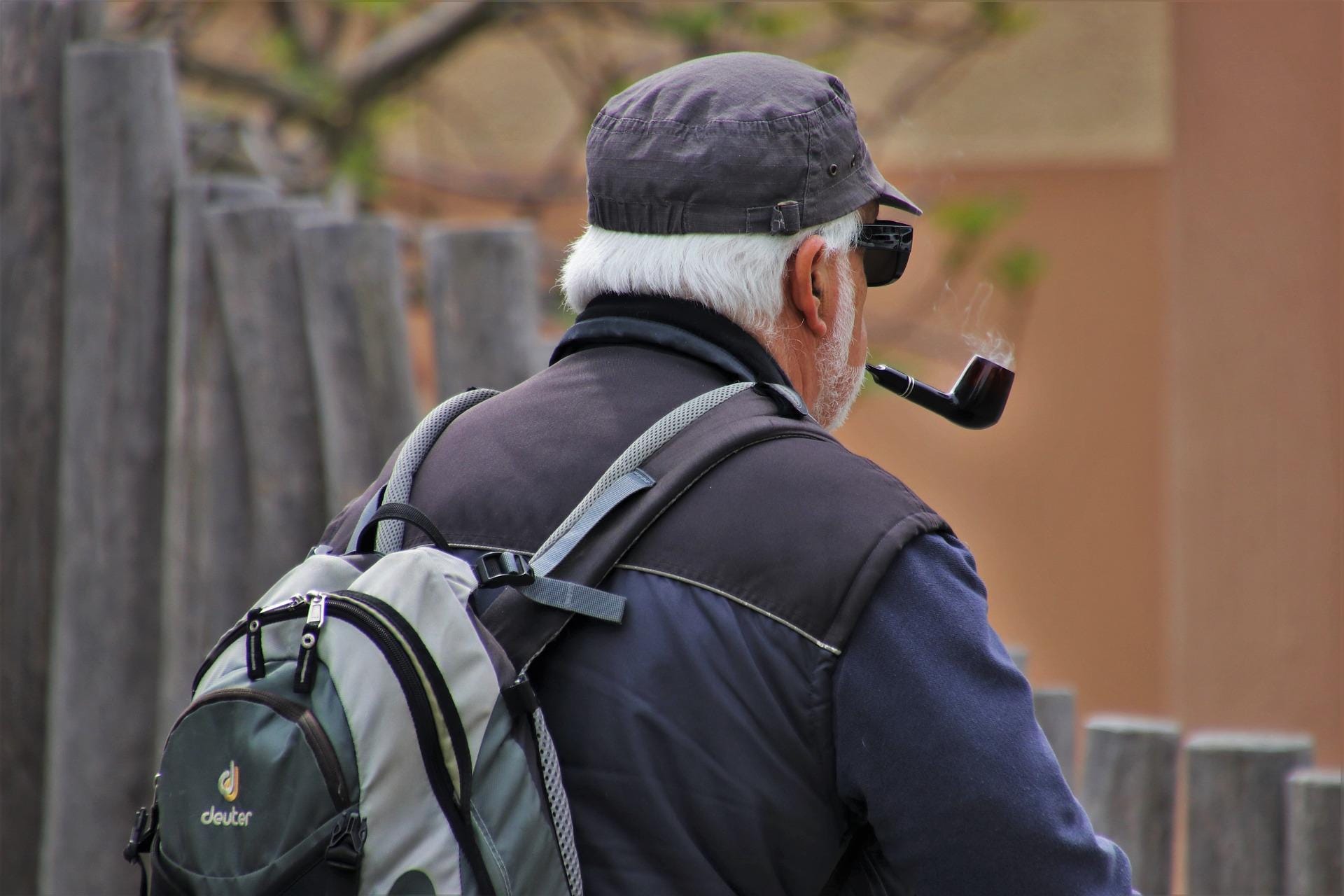
"About 20,000," Cal replied with one long puff on his pipe.
"Really! You and Mom sure didn’t drive much."
That was true – mostly doctor visits, trips to the grocery store and hikes in the nearby Jennings State Park – now that he and Ellen no longer drove to Florida each year as snowbirds, Cal thought.
Still, he dreaded the feeling of not having a car. It's so handy to jump in the car to go someplace when you need to or feel like it, especially in retirement, he told himself. He remembered the times he and Ellen would drive to the winery near Hastings on lazy Sunday afternoons during the summer, sit on the hillside, listen to the live music and sip wine or go downtown to a Twins baseball game.
Not having a car was another step in becoming dependent on others, a feeling (deep down) Cal hated. He tried to repress it, but it always seemed to be popping up lately.
"To get around, you need a car," Cal explained. "I don't want to depend on others to get around."
"I can understand that," Ben slowly responded. "Not having wheels is a big adjustment. Remember when I couldn't wait to get my driver's license when I was 16?"
"You had the 'chopper' bike – the coolest thing. I thought then that fancy bike would delay your wish for a car. But, I was wrong ..."
"I just read somewhere that kids getting out of college aren't rushing out to buy cars," Ben quietly observed. "These days they want to live and work downtown. They don't want to be tied down with a mortgage or a car they really can’t afford right now. They bicycle to work, walk, use Uber or rideshare or take the light rail. Have you ever taken the light rail, Dad? There's a station just a block from your place, and you can now reach your doctors and dentist – and a ballgame – by light rail ..."
"No, too dangerous," Cal pointed out. "I've watched those trains jerk and stop, jerk and stop ..."
"But no steps – smooth sailing from the street sidewalks into the train," Ben explained, dashing his right hand through the air. "I know a guy who has a mobility scooter, and he uses the light rail all the time to get to work. He lost a leg in Iraq. He can walk but finds it easier to use his scooter for long distances. And, it frees up their car for his wife to go to work. He calls his scooter their second car."
Cal shook his head incredulously. "A scooter can't replace a car ..."

JOIN OUR LIVE CHAT on 12/15/2024. Check my new list of social predicaments — first available for all of us on Sunday’s (12/15/2024) live chat at 1:00 p.m. central. Watch your email on Saturday noon and Sunday noon for the link to our 1:00 Sunday live chat. - Jim Hasse
"I was surprised when I saw his scooter," Ben continued, almost to himself in trying to visualize the vehicle once again in his mind. "It's got four wheels with suspension, rack and pinion steering, taillights, a headlight and left and right turn signals. It can go up to nine miles an hour and 15 miles per charge. It reminds me of my chopper – with high handlebars. But, it's much sleeker – really kind of sexy."
"Not like my Honda Accord hybrid," Cal added with a grin.
"I'll give you that," Ben allowed with a chuckle. “I’ll betcha there’s a Honda somewhere in that new mobility service Green Meadows is offering its residents. Five miles to your stop and five miles back – for free. All with the same person with a personal car. Like having a personal chauffeur. You can’t beat that.”
“With no need for a tip,” Cal pointed out.
Yes, no need for a tip,.” Ben repeated.
“You know I’m not tied to Honda,” Cal added. “I used to have a 1966 Ford Mustang …”
It was then that Ben surprised Cal with an intriguing idea.
"How about we put your Honda through its paces before we let the next owner set hands on it and just you and I take it on a tour of Route 66 for as long as we're having fun?" Ben offered. "After we get back, we can look at souped-up mobility scooters – and the other options, like your next chauffeur.”
It was a deal Cal could not refuse.
It was then that he recalled what Ann Landers once wrote:
"Some people believe holding on and hanging in there are signs of great strength. However, there are times when it takes much more strength to know when to let go and then do it."
Cal’s takeaway tip from his story: Know when to let go of things we once cherished.

Here’s to mature-adult living!
Jim Hasse, ABC, GCDF retired, author of “52 Shades of Graying”
Sharing our Insights Each Week as We Discover New Shades of Aging
Accolade: “I resonated with your story!" - Kathleen M.
How to use “My Latest Legacy Nugget” resources to share
your “52 Shades of Graying” comment with a family member or friend.
Template for “My Latest Legacy Nugget” note - birthday
Template for “My Latest Legacy Nugget” note - graduation day
Template for “My Latest Legacy Nugget” note - holiday greeting
Template for “My Latest Legacy Nugget” note - special day
Template for “My Latest Legacy Nugget” note - wedding anniversary
Template for “My Latest Legacy Nugget” note - wedding day
See all past issues of “52 Shades of Graying.”
See all past chats of “52 Shades of Levity.”
Check guidelines for your “52 Shades of Graying” Discussion Group.
I always thought white wall tires were sexy – at least on American-made cars.
When I got my new company car in 1990 (a Camry), I had the dealer switch the boring black tires which came with the car to white wall tires – at the amusement of the other senior staff members at work, all of whom ordered Chevys or Fords.
When I left my job in 1994, I bought the Camry (still with white wall tires) and drove it a couple of years before Pam and I found that we didn’t need it as a second car. So we gave it to our niece (still with white wall tires).
Our niece, of course, was more mod than we were, and the white walls soon disappeared – a detail easily fixed by turning the white-wall side of each tire inward.
Yes, white wall tires looked so fine, but Japan changed that, and I now admit that white walls were a pain to keep clean. Not essential but a tidbit (along with the biggies) I’ve learned to let go.
* When have you found a way to let go of what you once considered essential?